Thanksgiving is one of the most celebrated holidays in the United States, with 91% of Americans observing it. It’s a time to give thanks for the good things in life — food, family, love and so much more. However, how we celebrate Thanksgiving varies.
Christmas and Halloween have several near-universal practices, such as presents, trees and costumes, but Thanksgiving may look entirely different from family to family. Some might go out to dinner. Others might stay in with friends. Many travel far and wide to spend it with their loved ones.
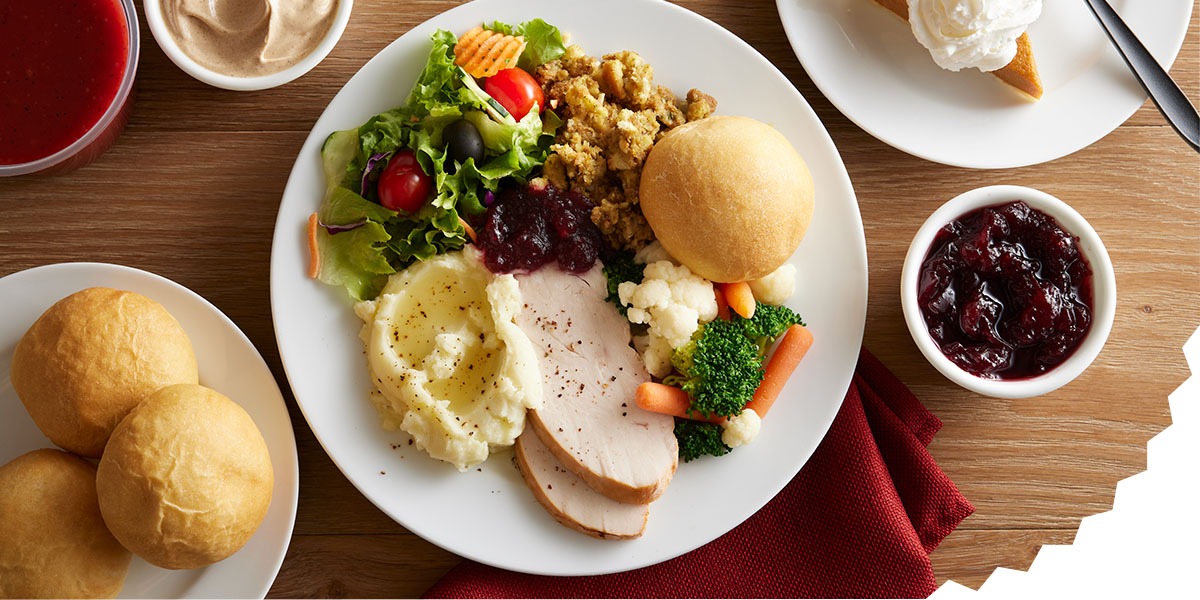
The one thing most Americans have in common is the food at the center of the table. While some families use ham, and others may not have a central dish at all, the dish most common across all tables is turkey. About nine in 10 Americans say they eat turkey on Thanksgiving every year.
But how did Thanksgiving Day and turkey become synonymous in the first place?
The Food of the First Thanksgiving
Let’s begin our exploration of why people eat turkey on Thanksgiving by dispelling a common myth — turkey likely wasn’t eaten at the “First Thanksgiving.”
The First Thanksgiving started as a harvest festival in the Plymouth colony in 1621. The colony, through a political alliance with the Indigenous Wampanoag people, had experienced a bountiful harvest and decided to celebrate. The food the two groups shared, however, didn’t necessarily include turkey.
Edward Winslow, a leader in the Plymouth colony, wrote in his journal that about a week’s worth of fowl were hunted for the festival, but historians believe these fowl were likely ducks or geese. The journal also tells us that the Wampanoag contributed five deer to the celebration. Winslow’s account, considered one of the more reliable ones due to its temporal proximity to the events described, doesn’t mention turkey.
Governor William Bradford’s recollection of the events, however, mentions a great store of wild turkeys. This account was penned a decade or more after the harvest festival and doesn’t mention the festival explicitly. Even if these wild turkeys were eaten as part of the First Thanksgiving, they were likely a side dish, rather than the main course.
Venison and waterfowl likely took center stage. Dried shellfish and smoked eels were also eaten, as the Wampanoag had taught the colonists how to find and cook both. Maize and other vegetables were also part of the meal.
Determining whether turkey was eaten or not is difficult. Not many records of the harvest festival exist outside the written accounts of Bradford and Winslow and the oral accounts of Wampanoag descendants. For the attendees, the harvest festival actually wasn’t particularly special. It was one day of thanksgiving among many for all involved.
So, Why Do We Eat Turkey on Thanksgiving Day?

The history of turkey on Thanksgiving is a bit more modern than you might expect. While the holiday originates from that three-day harvest festival in 1621, the turkey didn’t become a centerpiece until cultural and economic factors made them so in the 19th century.
The Cultural Answer
Let’s start by looking to literature. Charles Dickens’s 1843 novella “A Christmas Carol” prominently features turkey as the holiday’s centerpiece, which some have argued helped normalize the bird as a holiday food.
A much greater influence on American Thanksgiving traditions, however, came in the form of Sarah Josepha Hale. Hale was a women’s rights activist, a prolific writer and the editor of “Godey’s Lady’s Book,” the most-read women’s magazine in America before the Civil War. She’s largely responsible for making the turkey a Thanksgiving staple, as well as making Thanksgiving a national holiday in the first place.
In 1827, her novel “Northwood: Or, Life North and South: Showing the True Character of Both” was released. The book explored themes of gender, class and slavery while highlighting the virtues of 19th-century New England. Perhaps its most famous chapter is dedicated to a lavish description of a vast Thanksgiving feast. It features gravy, stuffing, pumpkin pie and cider, and at the center of the meal sits a mouthwatering roasted turkey.
The book was widely read and made Hale a leading authority on the then-regional holiday. This level of influence only grew when she took over “Godey’s Lady’s Book” and began penning annual articles praising the holiday as a simple, uniting force that could bring all Americans together.
Her real claim to Thanksgiving fame, however, is a 17-year-long letter-writing campaign she conducted that pushed for Thanksgiving to become a national holiday. She penned letters to a number of U.S. presidents, from Zachary Taylor to James Buchanan, until Abraham Lincoln was compelled by her letter to support the establishment of Thanksgiving as a national holiday in 1863. Both Hale and Lincoln felt the holiday would serve as a unifying force between the North and the South once the Civil War ended.
Because of these efforts and her iconic depiction of Thanksgiving dinner, Hale was and is often celebrated as the “Mother of Thanksgiving.”
The Economic Answer
As Thanksgiving expanded its reach across the U.S., so did the turkey. These animals were already being domesticated for food in the 18th and 19th centuries, but with industrialization, turkeys became one of the most efficient and valuable animals available.
Their large breast sizes and fast growth rates meant they could produce large amounts of meat faster than many other animals. A single turkey could feed a whole family, whereas a chicken might only be enough for one or two people.
Turkeys also offer a unique advantage since raising them for meat doesn’t require sacrificing other valuable resources. Unlike cows, which provide milk, or chickens, which lay eggs, turkeys can be raised primarily for meat without impacting these additional resources.
The sheer size of the turkey population also means the meat comes at lower prices and in larger amounts. Over 210 million turkeys were raised in 2022 — more than five times the amount eaten on Thanksgiving. Another reason for their popularity is that they tend to hatch in the spring and reach maturity in the fall, which aligns perfectly with the surge in demand around Thanksgiving.
Plan a Corporate Thanksgiving Meal With Apple Spice Catering
Thanksgiving dinner doesn’t have to involve staying at home or preparing food all day. Apple Spice Catering can bring an authentic Thanksgiving experience to your office or workplace. Our fresh meals are made each day based on our customers’ needs, and for 30 years, we’ve prided ourselves on our ability to cater events large and small.
To learn more about how we can help you bring Thanksgiving to work, fill out our contact form or call your nearest location.